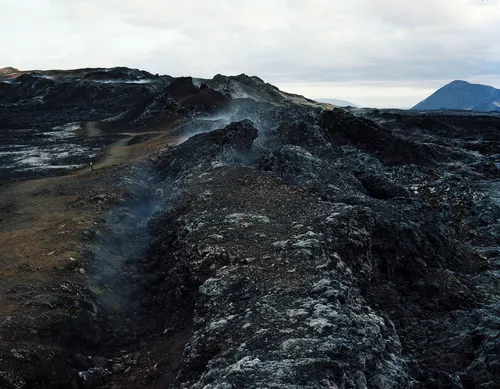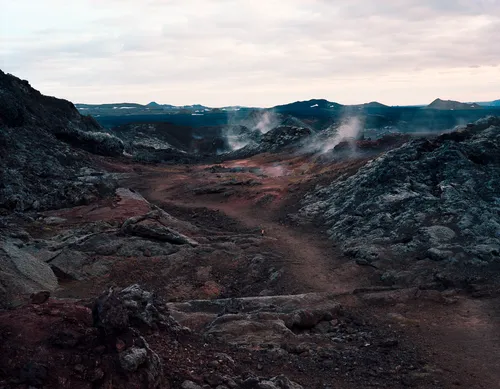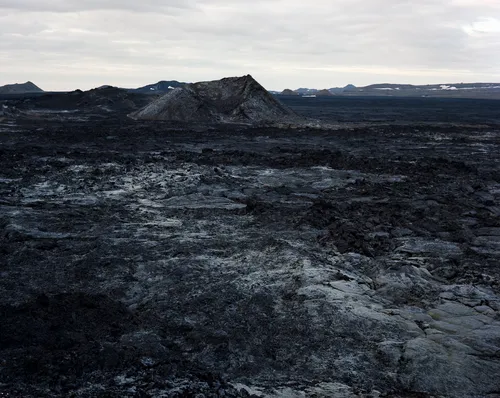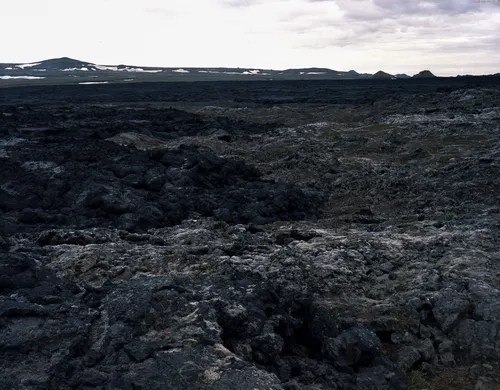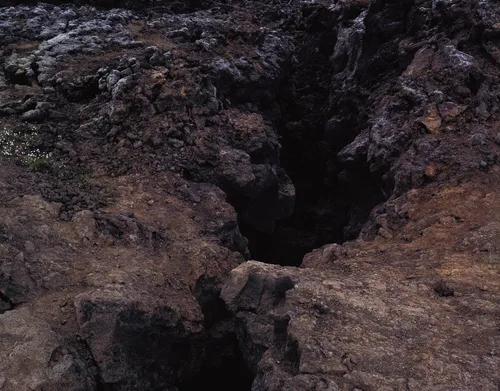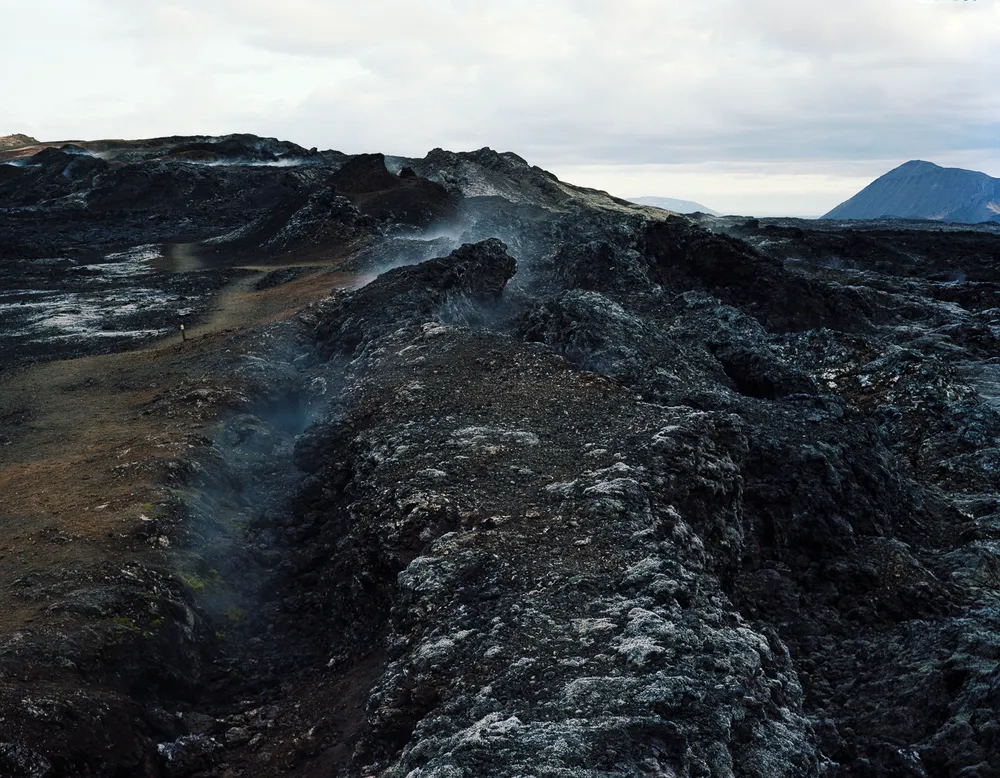
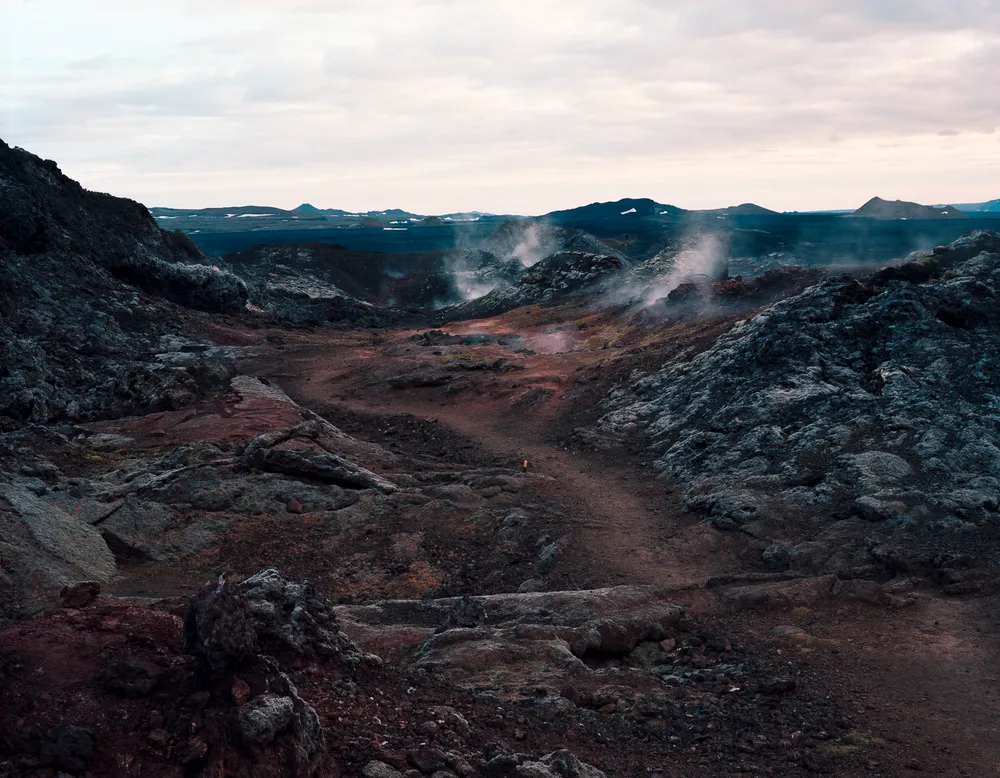
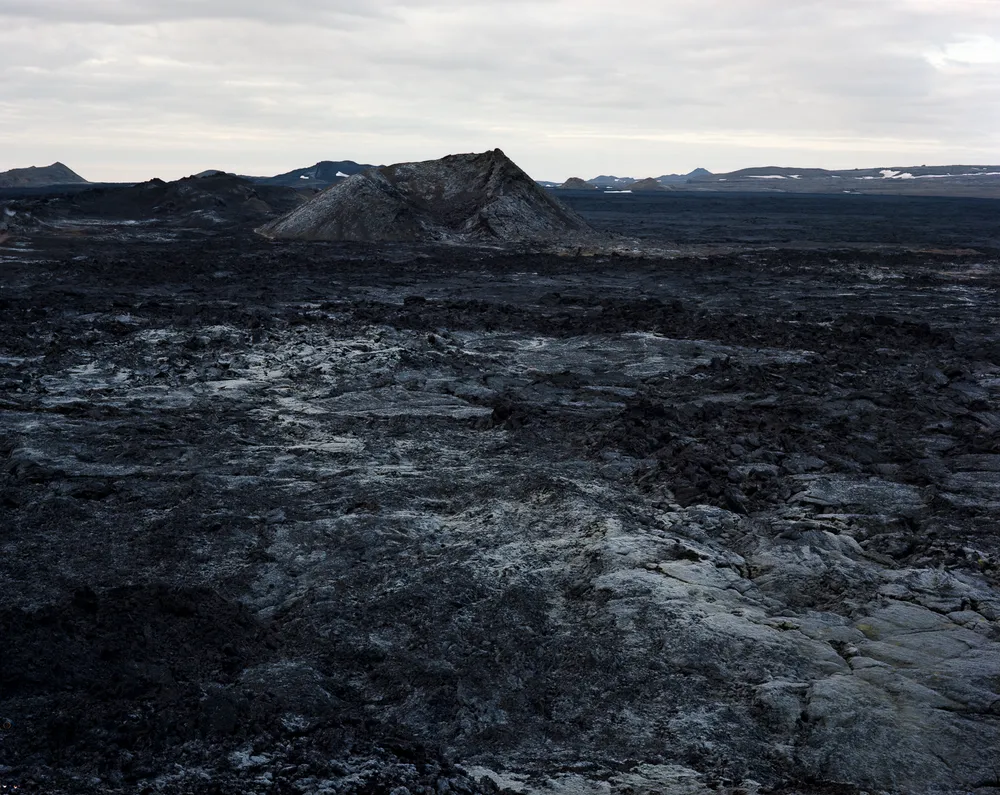
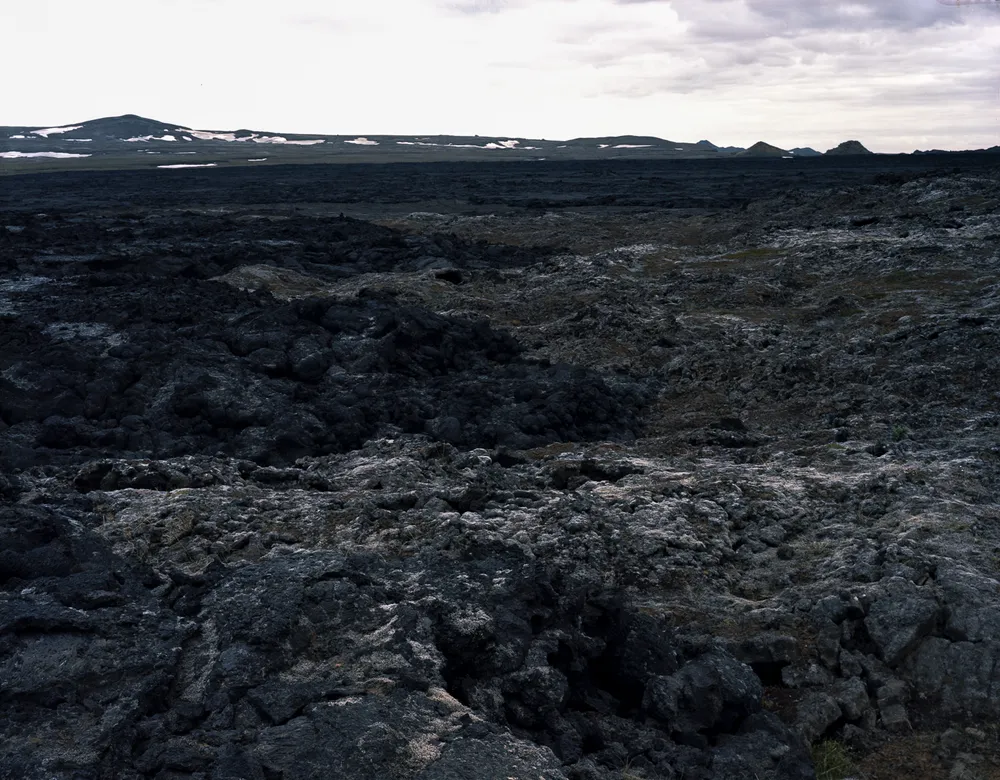
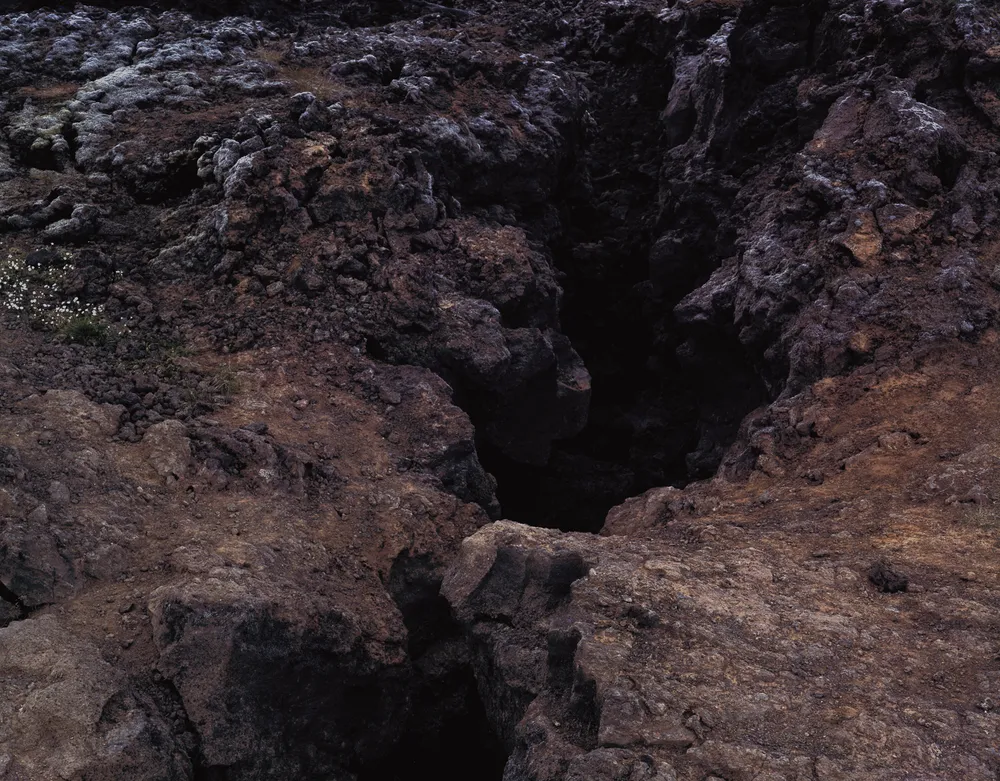
The photographs were made at Krafla in the summer of 2011, but the ground they stand on refuses the past tense. Northeast Iceland sits at the junction of the North American and Eurasian tectonic plates, two continental masses still pulling apart at roughly the rate fingernails grow — a process with no completion date, no final position toward which it tends. The last eruption was 1984, the fissure swarms opening and resealing over nearly a decade of volcanic unrest, and twenty-seven years later the earth beneath the surface was still warm. What looks like landscape is actually event: solidified mid-motion, temporarily legible.
The same ground carries a climate record stretching back twenty thousand years, archived in lake sediments and pollen stratigraphy. That record is punctuated by three cold intervals each named for Dryas octopetala — a low Arctic wildflower whose pollen, abundant during cold episodes and absent during warm ones, gave scientists a biological marker for reversals written into the earth. The transitions between these intervals are among the most violent climate shifts in the geological record: temperatures lurching several degrees within a human lifetime, the planet declining to hold any state for long.
In the final photograph, a close-up of the volcanic ground, a white Dryas flower is growing in the still-warm earth. The flower that names the cold is rooted in heat. The word and the thing, the deep past and the geologically present, the named and the naming — all of it unfinished, all of it in the middle of becoming something else.